



Day 10
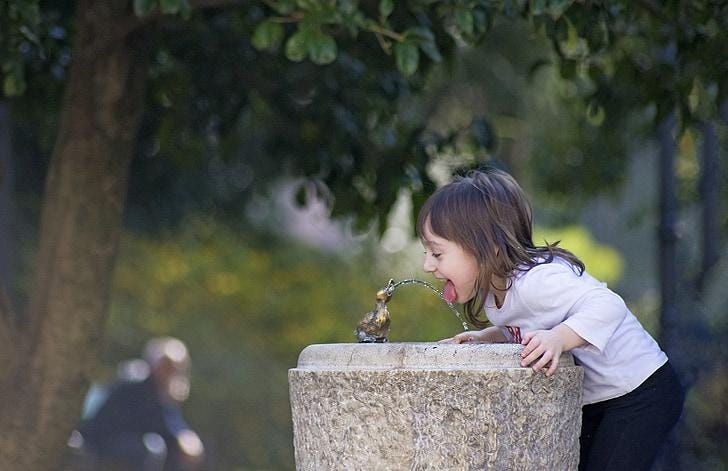
Since I was in middle school, I have experienced Vasovagal Syncope, where I will faint for seemingly no reason. Vasovagal syncope is a common, generally harmless, and temporary fainting episode usually caused by an overreaction of the nervous system to certain triggers, causing the heart rate to slow and blood vessels to dilate. This leads to a sudden drop in blood pressure and reduced blood flow to the brain, resulting in fainting. Common triggers for these episodes include intense emotions - fear, stress, shock - as well as surprising or intense pain, the sight of blood or needles, prolonged standing, heat, dehydration, or hunger. I have passed out following all of those triggers at one time or another, but dehydration is the number one trigger for me, as my body doesn’t naturally produce enough electrolytes to remain balanced. I need to supplement my liquid diet with sodium and citrus infused-water. If I go too long without water, I’m setting myself up for a fainting spell.
We’ve all experienced thirst. A thirst that we try to satisfy with our favorite liquids - coffee, fruit juices, sodas, alcohol. And while those are fun to drink, they just can’t satisfy our deep need for clean, pure water; in fact, those liquids often just make us more thirsty for water. If we could only drink in a long draught of cool, clean water, we would be okay. This thirst for water is as ancient as humans roaming on earth, which was why wells were a basic necessity in ancient times. Much of the world was arid desert, with little to no water, making it deadly and uninhabitable. And where there’s no water, there’s no life. The first task that the early settlers of the Middle East prioritized was finding a water source and digging a well; otherwise, their families and herds were sure to perish.
In today’s excerpt from John’s gospel, we’ll peek in on an encounter Jesus has with a woman at a rather historic well in Samaria. On this trip to the community well, this thirsty woman will get much more than she went for.
Read John 4:1-26
When Jesus heard that the baptisms of His listeners were becoming the main issue, rather than what He was actually preaching, He decided to move on from Judea and head back to Galilee, farther away from Jerusalem and those who wanted to distract the people from what He was emphasizing - The Kingdom of God Drawn Near! While
Jesus passed through Samaria because it was geographically the shortest route, the words John uses may also indicate that Jesus’ itinerary was subject to the sovereign and providential plan of God. Samaria was the usual route taken by travelers from Judea to Galilee, but strict Jews, in order to avoid defilement, could bypass Samaria by opting for a longer route that involved crossing the Jordan and traveling on the east side. It’s important to note that Jesus did not choose to go the long way around and avoid the Samaritans. He intentionally took this route, knowing full well how it looked to religious leaders and even some of His disciples.
The Samaritans were a racially mixed group of partly Jewish and partly Gentile ancestry, disdained by both Jews and non-Jews. 2 Kings 17 describes the king of Assyria bringing foreign people to settle in Samaria in 722 B.C., in place of the Israelites that he had captured and taken to Assyria. Over time these Mesopotamian colonists had intermarried with Jews who had remained in the area. These Samaritans had their own version of the Pentateuch, their own temple on Mount Gerizim, and their own recounting of Israelite history.
Jacob’s Well
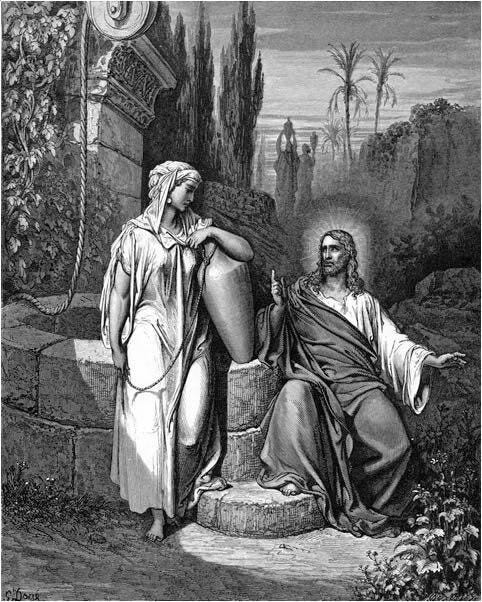
So Jesus, worn out from His journey, sits down by Jacob’s well to rest around noon. When the sun is at its highest, a woman comes to draw water from the well. This isn’t the first time in Israel’s history that a man and a woman have met at a well. Abraham’s servant met Rebekah at a well in Nahor, outside Haran and brought her back to Canaan to marry Isaac. Then their son, Jacob, met his wife, Rachel, at that same well years later. When Moses had fled Egypt and his princely throne after murdering an Egyptian, he met his wife, Zipporah, and her sisters at a well in Midian.
The story of Jesus meeting a woman at a well begins by following the same pattern as the stories of Isaac, Jacob, and Moses: Jesus journeys toward his hometown but passes through Samaria first. He then encounters a lone Samaritan woman at the well. John reminds us that it was “Jacob’s well” (v 6), further linking this story with the meeting of Jacob and Rachel. Jesus tells this woman that no matter how much water she drinks from this well, she’ll always thirst for more. Then He offers “living water” (v 10) that could quench her thirst forever. This isn’t well water Jesus is talking about, but God’s own life that would come through Jesus, to satisfy her deepest thirst. Jesus’ offer of living water is an allusion to the Eden paradigm, where water flowed from the middle of the garden to sustain the whole earth. (Gen 2:10-14) Jesus is offering her life-sustaining water in connection with Himself.
As strange an image as this is for us to process, imagine how this woman felt. She was so thirsty…to be truly loved, seen, valued, forgiven. Somehow Jesus knew everything about her and was still offering her water that would “become a well of water springing up in her for eternal life.” (v 14) A well within her? A means to being satisfied, satiated, forever? How could this be? Finally she says, “‘I know the Messiah is coming (who is called Christ). When he comes, he will explain everything to us.’ Jesus told her, ‘I, the one speaking to you, am he.’” (vv 25-26)
Bible Project founders, Tim Mackie and Jon Collins, provide an interesting extension of this strange image of drinking from a person. In their video, “Water of Life” they highlight a detail in the story of Jesus’ death on the cross that I had never seen before. After Jesus gives up His spirit and dies, a Roman soldier thrusts a spear into His side, and there’s blood, but also all this water flows out. Mackie explains that this image shows how Jesus’ death is a fountain of life.1 From Jesus, God’s own love, Who would die for His enemies, flows down and out into the world, quenching the thirst of all who come and receive.
Big Picture Questions for Today:
Are you thirsty? Are you looking to something other than Jesus to satisfy your thirst to be known, seen, valued, forgiven?
What would it look like to soak in the Living Water that Jesus offers you today? Later in John’s gospel he quotes Jesus offering, “If anyone is thirsty, let him come to me and drink. The one who believes in me, as the Scripture has said, will have streams of living water flow from deep within him.” (Jn 7:37-38)
Pray with the psalmist of Psalm 42, “As a deer longs for flowing streams, so I long for you, God. I thirst for God, the living God.” (v 1)
Jon Collins and Tim Mackie, The Bible Project, “Water of Life.” https://bibleproject.com/videos/water-of-life/.


