



I AM - The Gate for the Sheep
Yahoo! It is Sunday again and our third Feast Day!! On this Lord’s Day, enjoy worshiping with your church family, through songs and hymns, through the reading and teaching of God’s Word, through giving cheerfully, and enjoying the blessed gift of food, chocolate, social media, or anything you may have set aside for your Lenten promise.
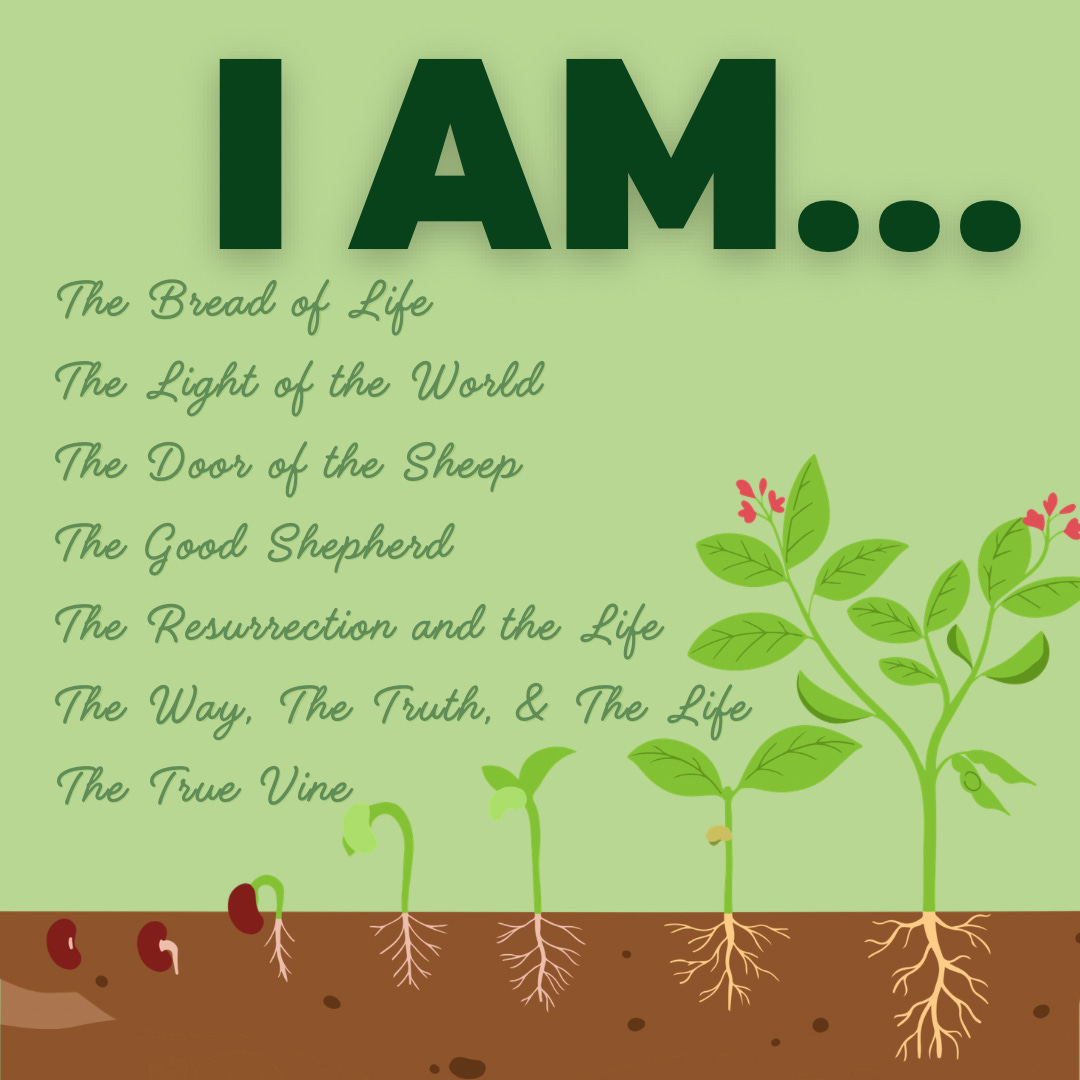
The Seven I AM’s
Each Sunday of #LentenDaily 2026 we will focus on a specific I AM statement made by Jesus to His followers. Jesus’ I AM statements would have particular significance to the first-century Jewish listener. Just as God had revealed Himself to Moses as the “I AM” when calling him to return to Egypt and lead His people out of slavery, Jesus used the same words to describe Himself throughout His ministry, as recorded by John. More specifically, “I AM WHO I AM” (Hebrew: Ehyeh asher ehyeh) is a profound declaration from Exodus 3:14, where God reveals His name to Moses as the self-existent, eternal, and faithful Deliverer. Signifying that God is not dependent on anything else for existence and is present with His people, this name represents an immutable, self-sufficient, and ever-present being. When “God replied to Moses, “‘I AM WHO I AM. This is what you are to say to the Israelites: I AM has sent me to you.’” (Ex 3:14), He was revealing Himself as the eternal, invincible, covenant-keeping God that He was, is and always will be.
Today we will take a look at the third of Jesus’ I AM claims, I AM the Gate for the Sheep.
Read John 10:1-10
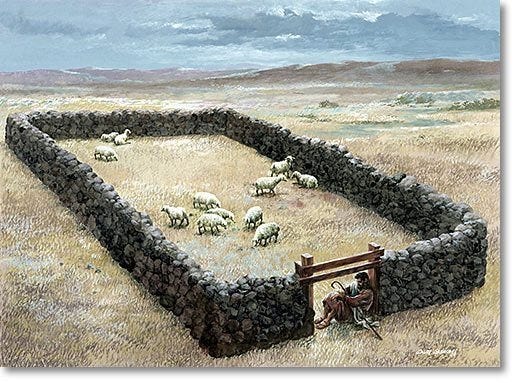
I imagine as Jesus was teaching His disciples, He looked out and saw a community sheep pen, also referred to as a sheepfold, and began to share more of Who He Is through this common illustration. The sheep pen was commonly a courtyard near or beside a house or village and bordered by a stone wall, in which one or several families kept their sheep. After spending the day outside in the fields nearby, eating grass and drinking fresh water from the stream, the shepherds would gather their sheep and lead them back to the sheep pen, to rest and for safety. Being exposed and out in the open fields after dark wasn’t safe and put the herd at risk of predators. Of course, there were seasons when the herds were required to graze far away from their sheep pen, in order to find fresh grazing land, but the most secure spot for the sheep was undoubtedly the community sheep pen. While these pens may or may not have had a formal door, there was only one way in and the entrance was guarded by a gatekeeper, who would be hired to stand watch over the sheep or by the shepherd himself.
Anyone who didn’t come through the gate, but instead over the stone walls was up to no good. Most likely a thief or a robber, these outsiders had to sneak in to take what was not theirs, because the sheep would not respond to a voice they didn’t recognize. That meant that the gate was at all times secure and guarded. The gatekeeper would not sleep during his shift; otherwise the entire flock was at risk. In smaller sheep pens, the shepherd himself would sometimes lie down at the entrance to the pen, becoming a human gate that protected the sheep from all intruders. Jesus boldly says, “Guys, I’m the gate and the gatekeeper for my Father’s sheep. The sheep who are mine recognize my voice and follow me.” (v 3, 4, &7, paraphrased)
But the community sheep pen and gate wasn’t all that Jesus was referring to when he proclaimed, “Truly I tell you, I am the gate for the sheep…If anyone enters by me, he will be saved and will come in and go out and find pasture.” (vv 7-9) He was referencing a Sheep Gate that had been in existence since the building of Jerusalem’s walls and the Temple.
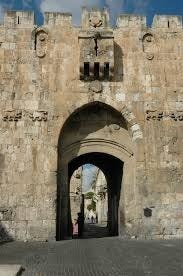
Historically, the Sheep Gate was named for its function in the sacrificial system of ancient Israel. Sheep intended for temple sacrifices were brought through this gate, then washed in the Pool of Bethesda, (where Jesus healed the paralytic) making it a vital part of the religious and economic life of Jerusalem. The proximity of the Sheep Gate to the Temple Mount facilitated the movement of sacrificial animals, underscoring the gate’s role in the worship practices of the Israelites.
When the Jews who had been in captivity in Babylon for 70 years were returned, only to find the walls of Jerusalem and the temple destroyed, none of the gates, including the Sheep Gate, were in good working condition. Later, when Nehemiah came to Jerusalem to oversee the reconstruction of the walls, the Sheep Gate was the first gate to be restored: “The high priest Eliashib and his fellow priests began rebuilding the Sheep Gate. They dedicated it and installed its doors.” (Neh 3:1) Rebuilt by the High Priest and his fellow priests, it is important to note that this was the only gate that was dedicated, or set apart as holy, as it was used for bringing in sacrifices for the temple.
Thousands of years had passed since Nehemiah’s reconstruction project, and now Jesus was here, fulfilling and explaining these beautiful symbols of sacrifice and salvation. Not coincidentally, Jesus always entered Jerusalem via the Sheep Gate, with the exception of the Triumphal Entry, when He entered through the Eastern Gate. (also referred to as Mercy or Beautiful Gate) The Sheep Gate also led to Golgotha, the path Jesus, “the Lamb of God, who takes away the sins of the world” (Jn 1:29) walked, carrying His cross on His back, to willingly give His life as a sacrifice for you and me. The Gate that keeps us safe and free, enabling us to live abundantly.
“Open the gates of righteousness for me; I will enter through them and give thanks to the Lord. This is the Lord’s gate; the righteous will enter through it. I will give thanks to you because you have answered me and have become my salvation. The stone that the builders rejected has become the cornerstone. This came from the Lord; it is wondrous in our sight. This is the day the Lord has made; let’s rejoice and be glad in it.” Psalm 188:19-24
And finally, please enjoy this beautiful song written and sung by Phil Wickham, “It’s Always Been You,” paying specific attention to the lyrics of the first verse, “You saw me first and You let me in when I was at my worst. The moment when I heard You say my name, it’s the first in so long I’m not afraid.”
Phil Wickham - It’s Always Been You (Official Lyric Video)
It’s Always Been You, by Phil Wickham, 2021
-Verse 1-
You saw me first
And You let me in when I was at my worst
The moment when I heard You say my name
It’s the first time in so long I’m not afraid
I’m not afraid
-Chorus-
You are the voice that calms the storm inside me
Castle walls that stand around me
All this time, my guardian was You
You are the light that shines in every tunnel
There in the past, You’ll be there tomorrow
All my life, Your love was breaking through
It’s always been You
It’s always been You
-Verse 2-
My northern star
Your love will be the compass of my heart
Oh, I just wanna be right wherе You are
Right where You arе
-Chorus-
-Bridge-
Who stood with me in the fire?
It was You, it was always You
Who pulled me out of the water?
It was You, it was always You
And who carried me on Their shoulders?
It was You, I know it’s You, You
-Chorus-
You are the voice that calms the storm inside me
Castle walls that stand around me
All this time, my guardian was You
You are the light that shines in every tunnel
There in the past, You’ll be there tomorrow
All my life, Your love was breaking through
It’s always been You
And it’s always been You
It’s always been You
It’s always been You


