

Can you believe it? Easter is finally here! Our Lenten practice and fast over the last 40 days has built up to this day. There is no more sacrificing or giving something up in order to identify more fully with Christ’s sufferings! Hallelujah! Today, as you celebrate Resurrection Sunday with family, friends and your church family, you may hear people say, “He is Risen!” The appropriate response is, “He is Risen indeed!” In case you are wondering, this ‘paschal greeting,’ also known as the Easter Acclamation, comes from the Hebrew word, Pesach, which refers to the Jewish Passover. Those who live in Greece, will hear or say, “Christos anesti“ (Christ is risen), and other Grecians will then respond “Alithos anesti“ (truly, He has risen), this is known as the Paschal Greeting. These words are sometimes accompanied by the exchange of three kisses, alternating on each cheek; one kiss for each member of the Trinity.
In the Western culture of Christianity, when one person rejoices with, “He is Risen!” others answer, “He is risen, Indeed.” Saying “He is risen!” allows us to share this extraordinary truth with each other. The resurrection of Jesus provides an outpouring of hope for our salvation and for our own resurrection and eternal life. This rejoicing of Jesus’ victory is also a victory for those whose lives now belong to Christ because all who believe in Him will have eternal life. His victory is now ours!
In today’s reading, gospel writer John highlights Mary Magdalene’s encounter with the resurrected Jesus, along with all of the emotions she experienced before, during and after this intentional, most precious meeting.
Read John 20

Before meeting Jesus, Mary Magdalene was a tormented woman from Magdala plagued by “seven demons,” likely indicating severe physical and psychological illness or acute spiritual oppression. Jesus healed her, sparking a life of devotion to his ministry. Later writers in church history connected Mary Magdalene to the sinful woman who anointed Jesus’ feet with precious oils at Simon’s house, from Luke’s gospel account, (Luke 7:37) calling her a former prostitute. However there is no evidence for this in the biblical text or in early church history. The Synoptic gospels simply inform readers that Jesus healed Mary Magdalene of significant demonic possession, and that she gratefully followed him throughout His ministry, to the foot of the cross and the empty tomb. How could she not follow her Healer, her Teacher, her Lord? He had completely transformed her life, from the inside out - her only reason for living.
Mary Magdalene only appears in John’s gospel by name at Jesus’ crucifixion and now at the tomb, “on the first day of the week.” (v 1) Luke tells us “all who knew him, including the women who had followed Him from Galilee, stood at a distance watching these things,” (Luke 23:49) making it clear that there was a group of women, of whom Mary Magdalene was part, who had been with Jesus all along. They now begin to take prominence in the narrative. They are the ones who stay and witness Jesus’ death after the disciples have fled. They are the ones who follow Joseph of Arimathea to the burial site. (Luke 23:55) And, of course, they are the ones who first learn of Jesus’ resurrection.
The four gospels vary in their accounts of who first visited Jesus’ empty tomb. In Luke, it is just “the women”; in Matthew, it is “Mary Magdalene and the other Mary”; in Mark, it is “Mary Magdalene, Mary the mother of James, and Salome”; and in John, it is just “Mary Magdalene.” The common denominator in all these accounts is Mary Magdalene, and even when multiple women are mentioned, her name comes first.
In John’s version, Mary Magdalene is the only woman mentioned by name. However, when she runs to tell Simon Peter and John (the one Jesus loved) that the stone had been removed, she uses the plural pronoun, “They’ve taken the Lord out of the tomb, and we don’t know where they’ve put him!” (v 2) indicating that she wasn’t alone. She was part of a group of women who came to the tomb as soon as it was permissible following the end of the Sabbath.
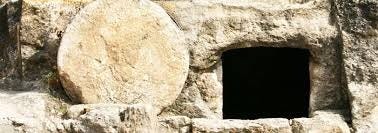
After sharing the horrible news that Jesus’ body had been taken, Mary Magdalene follows Simon Peter and John back to the empty tomb. I have to chuckle at John’s added detail that he outran Peter, as if he wants to make sure we all know that he was younger and faster than “Old Man Peter!” The men go inside the tomb and see the linen cloths that Jesus’ body had been wrapped in lying there. In fact, John writes that when he went in and saw the cloths, he believed! He was beginning to put some of the pieces together, understanding the Scripture that Jesus must rise from the dead. (from v 9)
John and Peter head back to the rest of the disciples, “but Mary stood outside the tomb, crying.” (v 11) Alone, Mary Magdalene sees “two angels in white sitting where Jesus’ body had been lying, one at the head and the other at the feet.” (v 12) She explains that she is inconsolable because her Lord and Master, Jesus, has been taken. She then turns around and meets the risen Jesus face to face. Their close relationship seems evident from her panic at discovering that Jesus is gone, how she kneels by the empty tomb and weeps, thinking that someone has moved or stolen the body. When she realizes that Jesus has risen, she cries out the Aramaic word for teacher, Rabboni, and tries to embrace him, but Jesus instructs her not to cling to Him “since I have not yet ascended to the Father. But go to my brothers and tell them that I am ascending to my Father and your Father; to my God and your God.” (v 17) Between that moment and the one when she relates to the disciples what has happened, she alone is the entirety of the Christian gospel on Earth. Think about that for a moment. Mary Magdalene becomes the evangelist to the apostles, the first one to preach the Good News of the resurrection!
Following ascension, Jesus would appear to all of His disciples, moving through physical walls, appearing and disappearing, allowing each of them to believe in His resurrection at their own pace. John ends this story by sharing why: “Jesus performed many other signs in the presence of his disciples that are not written in this book. But these are written so that you may believe that Jesus is the Messiah, the Son of God, and that by believing you may have life in his name.” (vv 30-31) Life in His Name: The I AM According to the Gospel of John. We end right back where we started these Lenten lessons.
Big Picture Questions for Today:
As we conclude our #LentenDaily2026 devotional today, does this Easter Sunday mean more to you?
Can you describe how this lenten experience has grown your understanding and appreciation for all Jesus has done for you?
Pray, and thank Jesus for His passion for you, culminated in His sacrifice on your behalf on the cross. “For the joy set before Him, He endured the cross despising its shame.” (Heb. 12:2) Rising again wasn’t His joy. Providing the way for you to be adopted into the family of God, forgiven of all your sins and to live with Him in glory forever…that was His joy!
HE IS RISEN! HE IS RISEN, INDEED!
It wouldn’t be Easter for me if we didn’t sing “Christ the Lord is Risen Today,” written by Charles Wesley in 1739 and performed by Travis Cottrell on his recent project, Tribute to the King.