



Sunday, February 22, 2026
I AM - The Bread of Life
Yahoo! It is Sunday! And our first Feast Day!! On this Lord’s Day, enjoy worshiping with your church family, through songs and hymns, through the reading and teaching of God’s Word, through giving cheerfully, and enjoying the blessed gift of food and anything else you’ve been fasting from.
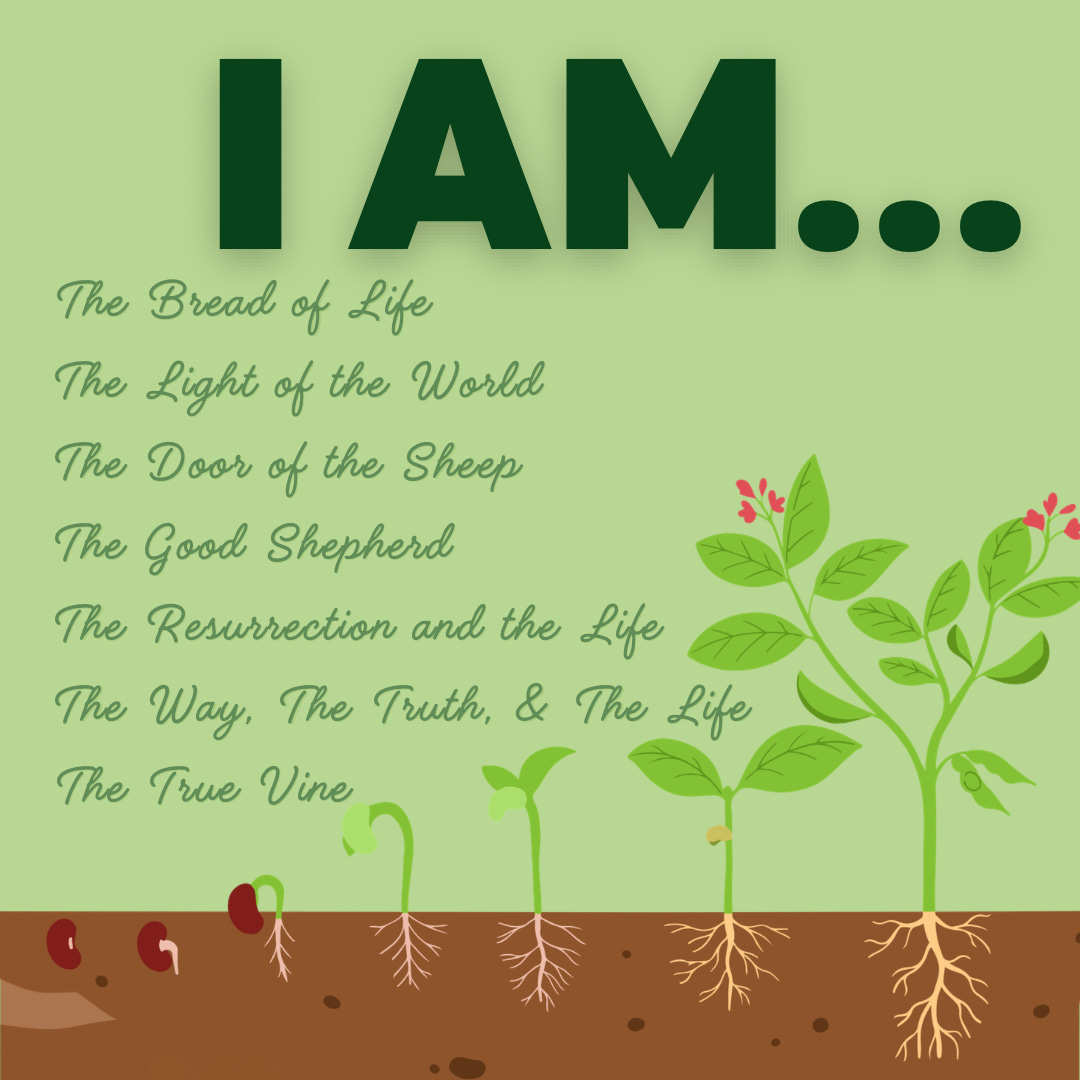
The Seven I AM’s
Each Sunday of #LentenDaily2026 we will focus on a specific I AM statement made by Jesus to His followers. Jesus’ I AM statements would have particular significance to the first-century Jewish listener. Just as God had revealed Himself to Moses as the “I AM” when calling him to return to Egypt and lead His people out of slavery, Jesus used the same words to describe Himself throughout His ministry, as recorded by John. More specifically, “I AM WHO I AM” (Hebrew: Ehyeh asher ehyeh) is a profound declaration from Exodus 3:14, where God reveals His name to Moses as the self-existent, eternal, and faithful Deliverer. It signifies that God is not dependent on anything else for existence and is present with His people. It represents an immutable, self-sufficient, and ever-present being. When “God replied to Moses, “‘I AM WHO I AM. This is what you are to say to the Israelites: I AM has sent me to you.’” (Ex 3:14) He was revealing Himself as the eternal, invincible, covenant-keeping God that He was, is and always will be.
Today we will take a look at the first of Jesus’ I AM claims, I AM the Bread of Life.
Read John 6:22-59

Chapter 6 of John is all about bread. Having recently fed a crowd of 5,000+ people who had come to hear Jesus teach and observe Him healing the sick, Jesus continues using bread that fills their bellies to make a point about belief. In fact, Jesus is actually addressing the matter of spiritual hunger throughout the entire chapter. That’s important for us to understand. Jesus has been building a case for this claim, “I AM the Bread of Life.” (v 35) through providing for the crowd’s physical hunger from five barley loaves and two fish, with baskets of leftovers besides. Wanting to see that trick again, or perhaps because they were hungry to experience more of Jesus and His beautifully strange teachings, the crowd gathered quickly around Him.
They thought they understood bread from heaven. Their ancestors were given manna daily for around 40 years in the wilderness. Every morning they would walk outside and there it would be. It was a practice of trusting that God would supply all of their needs. But now Jesus says, “The bread of God is the one who comes down from heaven and gives life to the world.” (v 33) and when His listeners ask Him for this magical bread, He says, “I AM the Bread of Life. No one who comes to me will ever be hungry…” (v 34) They have no idea how hungry they are for Jesus.
In his sermon on The Bread of Life, Alistair Begg suggests that:
“Spiritual hunger is not unique to a few individuals that choose to study their Bibles every so often. Spiritual hunger is a reality for every person in the whole world. It is as much a reality as is physical hunger. And the reason we know that is because God made us for himself. We can’t live by bread alone but only by every word that proceeds from the mouth of God. So whether people understand it or not, the deep-seated longings of a life, of a heart, the positioning of ourselves to try and make sense of our existence, is ultimately tied to the fact of our spiritual hunger.”*
Finally Jesus adds a nonsensical addition to His claims of being the Living Bread that came down from heaven, “The bread that I will give for the life of the world is my flesh” (v 51) at which point many listening began to question Jesus’ mental health and ultimately decide to stop following Him. The I AM of the Old Testament was right in front of them, offering much more than full bellies; spiritual refreshment that would never grow cold or run out.
Similarly, the I AM of the Gospel According to John is right in front of us, in the form of His living and active Word (our Bibles) offering us the same. When we find ourselves having gone a day without food during our Lenten fast, we don’t feel guilty because we have broken our promise; quite the opposite, we feel hungry. The same is true when we go without feasting on God’s Word. We tend to feel guilty, but that isn’t primary. We are simply hungry. Hungry to be spiritually full and satisfied, fed by our Savior, Jesus, and His incredible sacrifice on our behalf.
Lastly, enjoy this beautiful song entitled Living Bread, written and recorded by Steadfast Worship, a group of friends, musicians, servants, and Catholic worship leaders, based in the Archdiocese of Toronto.
Living Bread | Official Lyric Video | Steadfast Worship
Living Bread, by Steadfast Music (2021)
You are the Living Bread
You have done all You said You would
Water to wine, the branches and vines
And You have not failed us yet
Out of the grave You rose
A fixture of hope for us to find
A seed to be sown, a name to be known
For now and for all of time
Living Bread of Heaven, You are still here waiting
Offered in all You are and the cross You carry
All that we seek is in Your hands
Lifting our hearts, hallelujah
Out of the grave You rose
A fixture of hope for us to find
A seed to be sown, a name to be known
For now and for all of time
Living Bread of Heaven, You are still here waiting
Offered in all You are and the cross You carry
All that we seek is in Your hands
Lifting our hearts, hallelujah
Living Bread of Heaven, there is life that You bring
Poured out for Your people, of Your mercy we sing
There is only one thing to do
Lifting Your name, hallelujah
Jesus, You are all that we need
Your name brings us home
*Alistair Begg, “The Bread of Life” (December 3, 2023). Truth for Life: The Bible Teaching Ministry of Alistair Begg. (https://www.truthforlife.org/resources/sermon/bread-heaven/)


