



February 16, 2026
What Does the Term Lent Mean?
Lent in the Christian Church is the period preceding Easter devoted to fasting, prayer, repentance, forgiveness and generosity; all in commemoration of Christ’s fasting in the wilderness. In the Western Catholic Church and many protestant denominations, it runs from Ash Wednesday through Holy Saturday, and so includes 40 weekdays.
The word is traced etymologically to an Old English word lencten (related to lengthen or the lengthening of days) that simply refers to the season of spring. This season in the Church always fell during the springtime in Europe and over the centuries the word Lent became synonymous with the 40 days leading up to Easter.
Additionally for the Anglo-Saxon people, it was an easier word than the official Latin title. In Latin it is called quadragesima, which means the 40 days. (or more literally the fortieth day before Easter) This term identifies the season with the forty day period of preparation before the celebration of Jesus’ resurrection.
Why Fast During Lent?
While fasting before Easter seems to have been an ancient and widespread tradition, the length of the fast varied significantly from place to place and across generations. In the latter half of the second century, 500 years before Pope Gregory the Great entered the scene, writers tell us that the preparatory fast lasted one or two days, or 40 hours - commemorating what was believed to be the exact duration of Christ’s time in the tomb. Whether you fast for 40 days, partaking in one meal each day, with the exception of the Sunday feast days, or a 40 hour fast, the number 40 is important as it reminds us of the 40 days that Jesus spent in the wilderness, fasting and being tempted by Satan.
And these examples of the number 40 aren’t the only scriptural basis for a 40 day fast. Noah and his sailing zoo endured 40 days and nights of rain. Moses spent 40 days on Mount Horeb receiving the Word of the Law from God Himself. The Israelites spent 40 years in the wilderness. And remember Jonah, who prophesied to the Ninevites (albeit with a couple of significant detours) that they had 40 days to repent or be destroyed? It seems to be a special number for God and always results in restoration.
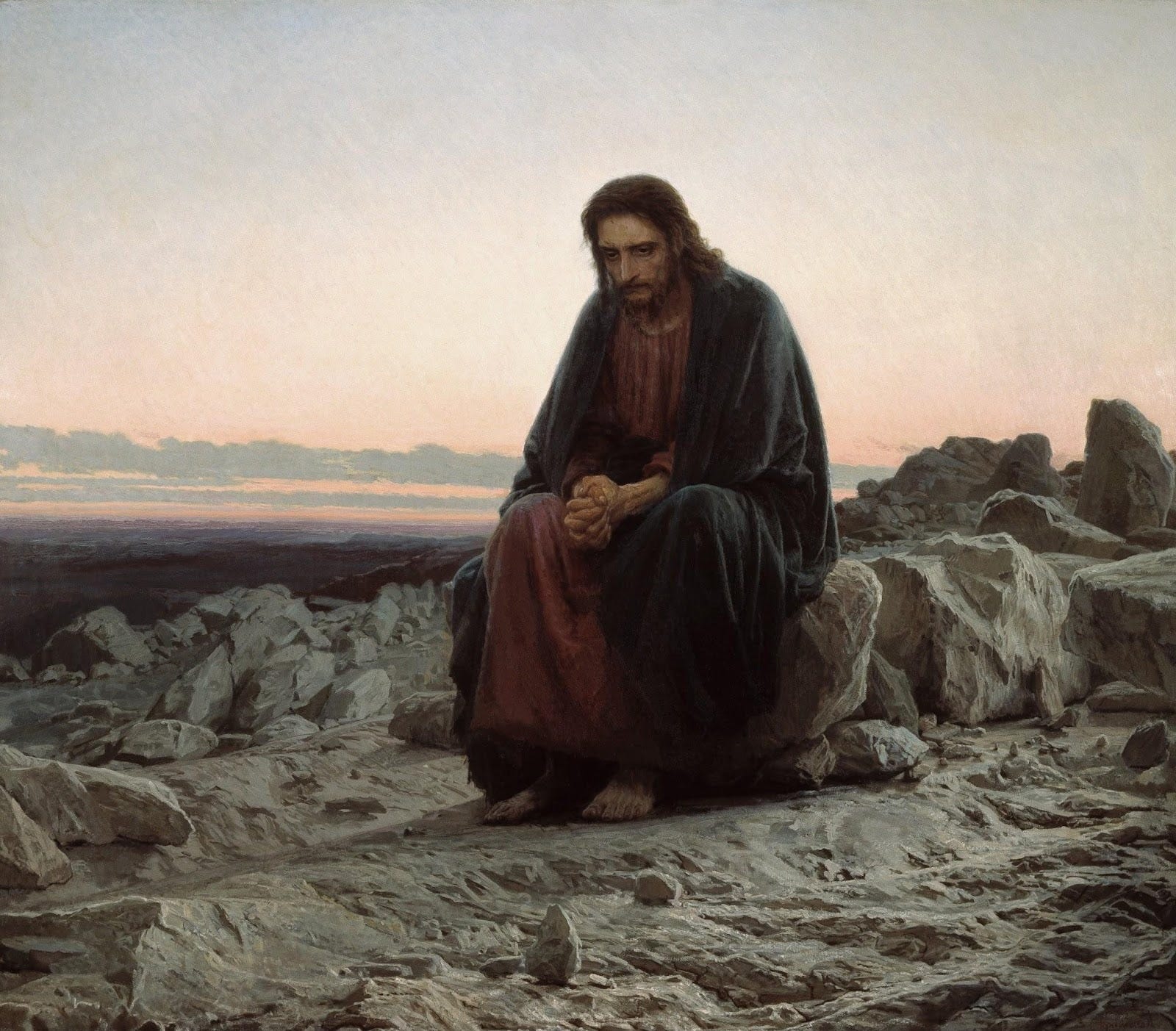
While in the wilderness after his baptism in the Jordan River by John the Baptist, Jesus was tempted in every way, with Satan appealing to his pride as well as his physical needs. When we fast from something during this period, be it one particular thing that we love to do or eat or drink or say, or an all-out 40 day physical fast, we identify with Jesus’ sufferings in a unique way. When the hunger or desire for that from which we are fasting enters our mind, we have the opportunity to turn our focus from meeting that physical desire to coming to the Father in prayer, and bringing our sins, hurts, desires and temptations to Jesus. Remember how Jesus responded to Satan’s temptation to turn some rocks into bread and satisfy His overwhelming hunger? He quoted Deuteronomy 8:3, “Man must not live by bread alone but on every word that comes from the mouth of God.”
Also, a Lenten fast doesn’t have to be a strict removal of something from your life, but can also include adding something to your daily routines that forces you to sacrifice and depend on the Lord. One year I decided to write a hand-written note to a different person every day, reminding them of their identity in Christ. I’m horrible about writing notes to people, so this was not only a sacrifice and discipline for me, it also forced me to pray each day for the person God had laid on my heart to write, asking Him to show me what that individual needed to hear from Him that day. Throughout our Lenten study of the I AM of John’s gospel, we will be regularly reminded of the importance Jesus placed on prayer for connection with His Father, for nourishment of His spirit, for wisdom and direction and for strength and courage to overcome Satan’s incessant temptations.
Is it 40 Days or 46 Days? I’m so confused!
For those of you who know your calendar like the back of your hand, you’ve quickly discovered that from Ash Wednesday to Easter Sunday is actually 46 days, not 40. So, if the 40 Day Fast truly commemorates Jesus’ 40 days in the wilderness following His baptism by John, then what do we do with these extra days?
If we refer back to Pope Gregory the Great’s influence on the Lenten calendar, he was quoted as claiming in a homily, “We do not fast on the six Sundays of Lent.” Therefore, since the 600’s AD, the six Sundays of the Lenten season have been known as Feast Days when believers celebrate the hope realized through the death, burial and resurrection of our Savior Jesus Christ.
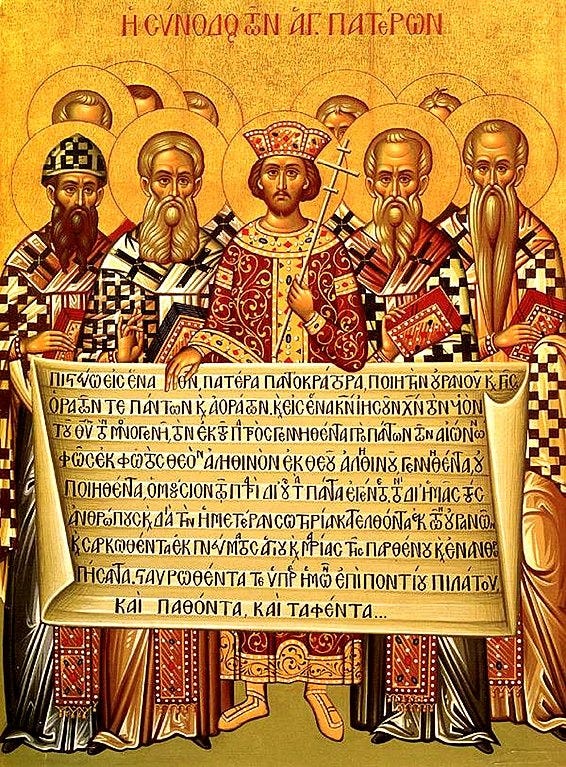
The Council of Nicea
However, the first clear and indisputable evidence for the 40 day Lent appeared far earlier in church history following the Council of Nicea in 325 AD. This first ecumenical council of the Christian church, called by Emperor Constantine I convened in hopes of affirming once and for all that Christ is a divine and equal member of the Trinity and not a created being as some were claiming. Throughout history there has been a need to recalibrate our beliefs and practices back to the essentials of our faith, protecting our churches from wolves in sheep’s clothing who seek to add or take away from the Gospel.
The Council of Nicea wrote a comprehensive statement of faith, familiarly known as the Nicene Creed. At the time, there was nothing of its kind. It was spread throughout the Roman Empire, memorized by church leaders and spoken each time the family of God gathered. It has stood the test of time as the only ecumenical creed because it is accepted as authoritative by the Roman Catholic, Eastern Orthodox, Anglican and major Protestant churches.
If possible, read aloud the Nicene Creed below. There is something powerful about the spoken word, especially when we are speaking the truth about our great and awesome God!
Nicene Creed:
We believe in one God, the Father, the Almighty,
Maker of heaven and earth, of all that is, seen and unseen.
We believe in one Lord, Jesus Christ, the only Son of God,
Eternally begotten of the Father,
God from God, Light from Light, true God from true God,
Begotten, not made, of one Being with the Father.
Through him all things were made.
For us and for our salvation he came down from heaven:
By the power of the Holy Spirit he became incarnate from the Virgin Mary, and was made man.
For our sake he was crucified under Pontius Pilate; he suffered death and was buried.
On the third day he rose again in accordance with the Scriptures;
He ascended into heaven and is seated at the right hand of the Father.
He will come again in glory to judge the living and the dead, and his kingdom will have no end.
We believe in the Holy Spirit, the Lord, the giver of life, who proceeds from the Father and the Son.
With the Father and the Son he is worshiped and glorified.
He has spoken through the Prophets.
We believe in one holy catholic and apostolic Church.
We acknowledge one baptism for the forgiveness of sins.
We look for the resurrection of the dead,
and the life of the world to come. Amen.
— Episcopal Church Book of Common Prayer (1979), The Book of Common Prayer
Big Picture Questions for Today
If you have participated in a Lenten Fast, what was your experience like?
Would you like to fast from something during this year’s Lenten season? Remember, it doesn’t necessarily have to be a fast from 40 days of food.
If you believe God is calling you to make a Lenten Fast commitment, consider telling one person who can hold you accountable and encourage you.
How do the words of the Nicene Creed move you? It is important that we practice the telling and retelling of the gospel, not only to others, but to ourselves.
Pray for God to give you clear direction regarding fasting during Lent and for the universal, worldwide Church, referred to as the catholic (lower c) Church in the Nicene Creed. Thank God for leaders who have stood for truth and clarity over the millennia.


